Heavy-duty Transmin screw feeder in industrial processing plant.

Heavy-Duty Industrial Screw Feeder Applications

Moving bulk materials from one point to the next is a challenge that varies enormously depending on what you are handling. Some materials are free-flowing and predictable; others are abrasive, corrosive, sticky, or subject to extreme temperatures. A screw feeder addresses these challenges with a simple, enclosed design that delivers controlled, metered flow across a wide range of industrial applications.

This article unpacks the key advantages of screw feeders, the applications they serve, and the range of bulk materials they handle effectively.
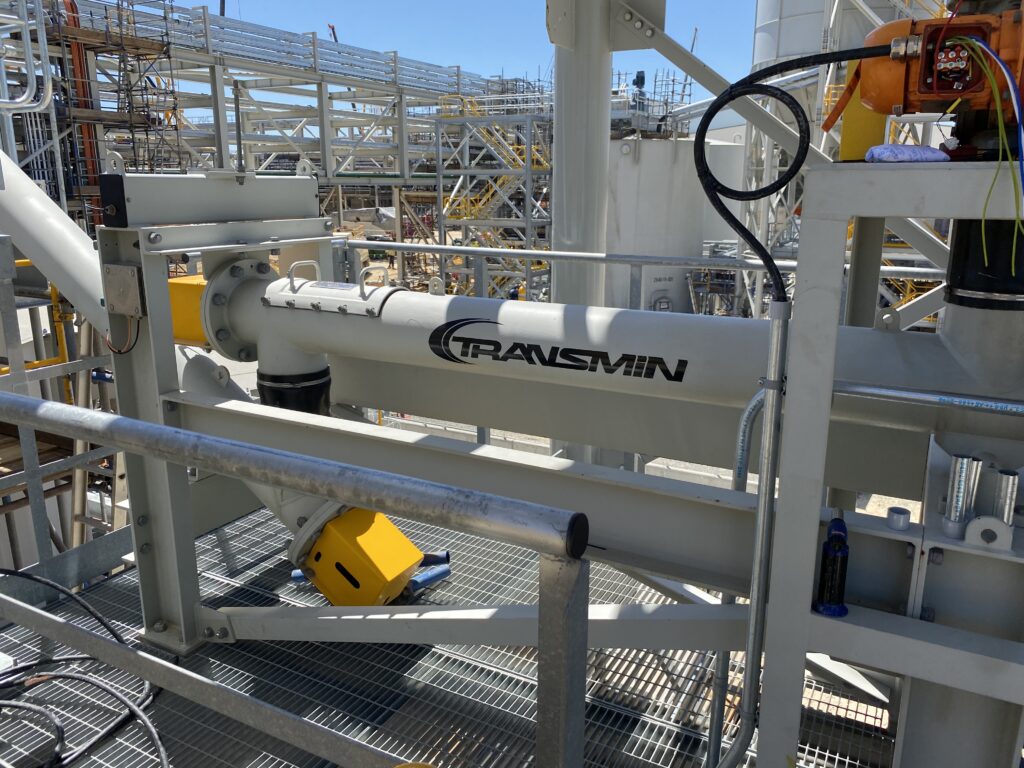
Heavy-duty Transmin screw feeder in industrial processing plant.

Moving bulk materials from one point to the next is a challenge that varies enormously depending on what you are handling. Some materials are free-flowing and predictable; others are abrasive, corrosive, sticky, or subject to extreme temperatures. A screw feeder addresses these challenges with a simple, enclosed design that delivers controlled, metered flow across a wide range of industrial applications.

This article unpacks the key advantages of screw feeders, the applications they serve, and the range of bulk materials they handle effectively.

Advantages of Screw Feeders

The screw feeder is one of the most versatile pieces of equipment in bulk materials handling. Its core design — a rotating helical screw within an enclosed trough or tube — moves material at a controlled rate, making it suited to applications where precision, containment, and reliability matter.

1. Compact and Space-Efficient

Screw feeders occupy a relatively small footprint compared to other conveying systems. This makes them well-suited to process plants, refineries, and industrial facilities where space is at a premium. Vertical screw feeders take this further, moving material upwards in a tight footprint with easy access for maintenance.

2. Precise Material Metering

One of the most valuable features of a screw feeder is its ability to meter material at a controlled, consistent rate. By adjusting drive speed, operators can set precise feed rates to reduce surge loading, improve process efficiency, and protect downstream equipment from overloading.

3. Enclosed Design for Dust and Spillage Control

Unlike open transfer systems, a screw feeder operates within an enclosed trough or tube. This contains dust, minimises spillage, and improves housekeeping around processing areas. For industries handling fine powders or environmentally sensitive materials, enclosed conveying can improve both operational cleanliness and workplace safety.

4. Suited to Difficult Materials

Screw feeders are capable of handling a wide variety of bulk materials, including powders, granules, sand, cement, lime, mineral concentrates, aggregates, and industrial waste products. Different screw designs can be tailored to suit varying material characteristics, including abrasive, sticky, or high-moisture products.

Screw Feeder Applications

Transmin’s heavy-duty screw feeder systems are used across industries where controlled material transfer and reliable throughput are non-negotiable.

1. Mining and Minerals Processing

Mining operations commonly use screw feeders to transfer fine ores, concentrates, reagents, and processed minerals between equipment stages. In these environments, screw feeders help maintain controlled flow into conveyors, mixing systems, processing equipment, storage silos, and packaging systems. Their enclosed operation also helps reduce dust generation when handling dry or fine mineral products.

2. Cement and Quarry Operations

Cement plants and quarry operations rely on screw feeders for handling powdered and granular materials such as cement, fly ash, lime, and aggregates. The consistent feed control provided by a screw feeder supports stable batching and mixing processes while reducing material waste.

3. Industrial Processing Plants

Screw feeders are widely used in chemical, fertiliser, food processing, and manufacturing operations where materials need to be transferred safely and consistently. Depending on the application, systems can be designed for metered feeding, variable throughput, high-temperature materials, corrosive products, or hygienic processing environments.

4. Waste and Recycling Applications

In waste handling operations, screw feeders assist with moving sludge, ash, biomass, recycled materials, and industrial by-products through processing systems. The enclosed design contains odours, dust, and contaminants at the source, reducing the risk of cross-contamination and keeping processing areas compliant with environmental and safety requirements.

Screw Feeder Bulk Materials Handling

A well-specified screw feeder handles a wide variety of bulk materials reliably. The following are among the most common materials Transmin’s screw feeders are specified for:

  • Lime and quicklime: used extensively in mining, minerals processing, acid neutralisation, and wastewater treatment. Transmin has supplied screw feeders for quicklime applications across a number of Western Australian processing facilities.
  • Ores and minerals: including iron ore, copper ore, nickel, and similar high-density materials that require robust construction and wear-resistant components.
  • Cement and powder concentrates: dry, fine materials where the enclosed design of a screw feeder is essential for dust control and accurate dosing.
  • Grain: free-flowing agricultural products that benefit from the gentle, consistent handling a screw feeder provides.
  • Corrosive and high-temperature materials: applications involving extreme conditions, including pressure or vacuum environments, are handled with stainless steel construction and appropriate sealing arrangements.

For operations integrating multiple conveying technologies, Transmin also supports broader bulk materials handling solutions across mining and industrial processing environments.

Specify the Right Screw Feeder for Your Application

Screw feeders are a reliable, space-efficient solution for a wide range of bulk materials handling challenges. From mining and quarrying to chemical processing and waste handling, a properly designed screw feeder improves conveying efficiency, reduces material loss, and supports reliable plant performance under demanding conditions.

Transmin offers a comprehensive range of heavy-duty industrial screw feeders, including standard Scutti models and custom-designed solutions, backed by nearly 40 years of engineering experience.

Get in touch with our team to discuss your application and find the right fit.

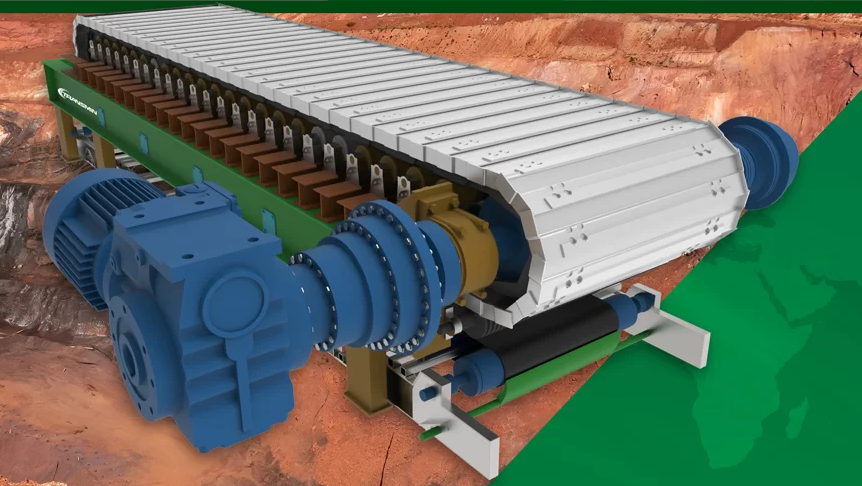
3D render of a heavy-duty apron feeder with a blue motor in a mining environment.

Tough Conditions? Apron Feeders for Heavy-Duty Applications

Run-of-mine ore arriving directly from the pit is about as unforgiving a feed source as you will find. Oversized rock, unpredictable lump size, high impact loads, and continuous duty mean most feeders are not built to handle all of that at once.

Heavy-duty apron feeders are built specifically for those conditions. When the material is heavy, abrasive, and arriving at volume, apron feeders are the equipment most operations turn to first.

3D render of a heavy-duty apron feeder with a blue motor in a mining environment.

Why choose an apron feeder over a conventional one?

Conventional belt feeders perform well in standard conditions, but they have clear limitations. Rubber belts degrade rapidly under sustained impact loads, abrasive materials, and high-temperature environments. When the application involves heavy, jagged ROM rock or continuous high-tonnage duty, belt feeders simply cannot keep pace.

An apron feeder uses interlocking steel pans mounted on heavy-duty chains to form a continuous, rigid carrying surface. The all-steel construction absorbs the kind of impact loads and sustained stress that would quickly destroy a rubber belt. That makes it well suited to applications where material is being loaded directly from trucks, loaders, or hoppers at high volume.

Beyond raw durability, apron feeders also deliver precise, controlled feed rates to downstream crushers, screens, and conveyors. Uncontrolled surges in high-throughput operations cause bottlenecks, accelerated wear, and costly unplanned downtime. Apron feeders eliminate that risk.

Common applications of apron feeders

  • Run-of-mine ore handling
  • Primary crushing circuits
  • Stockpile reclaim
  • High-capacity material transfer
  • High-temperature and abrasive material handling

Benefits of apron feeders for heavy-duty applications

1. Rugged construction

The steel pan design, robust frame, reinforced chain system, and industrial-grade components are selected to withstand continuous loads in harsh mining conditions. Transmin’s heavy-duty apron feeders are custom-designed with pan widths up to 4 metres, engineered to suit the specific application rather than adapted from a standard catalogue product. Transmin also uses BERCO SALT chain, sprockets, wheels, and rollers, components proven in the most demanding ROM applications at D9 and D11 dozer-level duty.

This construction makes apron feeders suited to operations handling iron ore, copper ore, gold ore, lithium, aggregates, and other high-density bulk solids. They are also a reliable choice for high-temperature applications, including materials exceeding 200°C, where rubber belts would quickly fail. It is one of the primary reasons apron feeders remain the preferred choice for primary feeding applications across the mining industry.

2. Impact resistance

Impact loading is one of the biggest challenges in bulk materials handling. The steel pan design absorbs impact forces far more effectively than conventional rubber belts, significantly reducing the risk of deformation, tearing, or premature failure beneath dump hoppers, primary crushers, and truck unloading stations where high-impact loads are unavoidable.

In demanding mining environments, this directly translates into longer service intervals and lower replacement costs over the life of the equipment.

3. Material handling capabilities

Apron feeders handle a wide range of materials that cause problems for conventional equipment. Large lump sizes, wet and sticky ores, highly abrasive material, and variable feed rates at high tonnage are all within their scope. The chain-driven steel pan design keeps material moving reliably even under difficult conditions, and the pan geometry Transmin uses minimises material leakage on the return.

For applications requiring an ultra-low profile or a combined feeder-conveyor layout that transitions from horizontal to inclined within a single machine, Transmin’s Low Profile Feeder (LPF) is worth considering, with belt widths up to 4 metres and throughput of 6,000 tph and above.

4. Controlled material flow

Consistent material flow is critical for downstream processing efficiency. Uncontrolled surges or erratic feed rates accelerate wear on crushers and disrupt plant performance. In high-throughput operations, that is an expensive problem to manage after the fact.

Transmin’s apron feeders are available with optional variable speed drive, giving operators real-time control over feed rates and protecting downstream equipment from surge loading. Pairing the feeder with quality conveyor components downstream further optimises the flow of material through your handling system, reducing bottlenecks and improving overall productivity.

Finding the right apron feeder for your operation

When operations involve abrasive materials, high-impact loading, and continuous heavy-duty operation, apron feeders remain one of the most reliable solutions available. Choosing the wrong feeder leads to accelerated wear, unplanned downtime, and throughput bottlenecks that affect your entire operation.

Transmin has nearly 40 years of experience specifying and supplying feeders across the full range of bulk materials handling applications, from heavy-duty ROM operations in the Pilbara to process environments worldwide. If you are working through a feeder selection for a new project or a replacement, the Transmin engineering team is worth talking to early.

Get in touch with the Transmin team today to talk through your application.

TH Group Appoints Transmin

TH Appoints Transmin as Sales & Service Agent for Australia, Southeast Asia, Canada and the United States

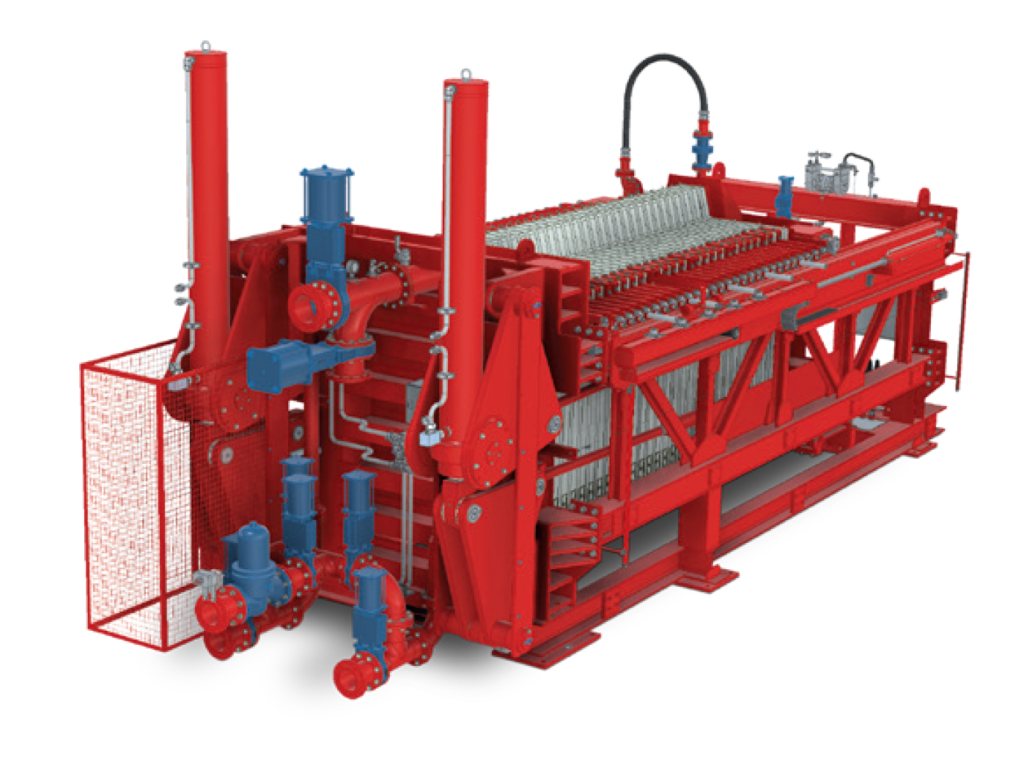
TH is pleased to announce the appointment of Transmin as its new sales & service agent for Australia, Southeast Asia, Canada and the United States. Through this strategic partnership, Transmin will represent and promote TH’s advanced dewatering and filtration solutions for the mining industry, further strengthening the company’s presence in key mining markets worldwide.

In addition to its commercial responsibilities, Transmin will also manage TH’s spare parts warehouse in Perth, Australia, enhancing local support capabilities and ensuring faster access to critical components for mining operations across the region.

Established in 1987, Transmin is a leading provider of innovative equipment and engineering solutions for the mining and bulk materials handling industries. Headquartered in Perth, Western Australia, the company has built a strong reputation for delivering high-quality technologies and technical support to mining operations globally. With extensive experience across a wide range of commodities and processing applications, Transmin is well positioned to support customers throughout the regions covered by this agreement.

TH has been active in the global mining sector for more than 60 years, working alongside some of the industry’s leading companies, including Glencore, Anglo American, Lynas Corp, Tianqi Lithium and Alkhem. Throughout this time, TH has developed and supplied filtration and dewatering solutions for mineral concentrates, rare earths and tailings management projects in mining operations around the world.

The appointment of Transmin represents an important step in TH’s international growth strategy. By combining TH’s expertise in dewatering and filtration technologies with Transmin’s strong market presence and technical capabilities, both companies aim to deliver an enhanced level of service, responsiveness and value to mining customers across these strategic markets.

We look forward to a successful partnership and to continuing to support mining operations with innovative, reliable and efficient dewatering solutions.

TH COMPANY is an international industrial company that helps its customers process natural resources efficiently through the design, building, sale and servicing of equipment and installations for fishing, mining and other industrial processes.

www.thsa.com

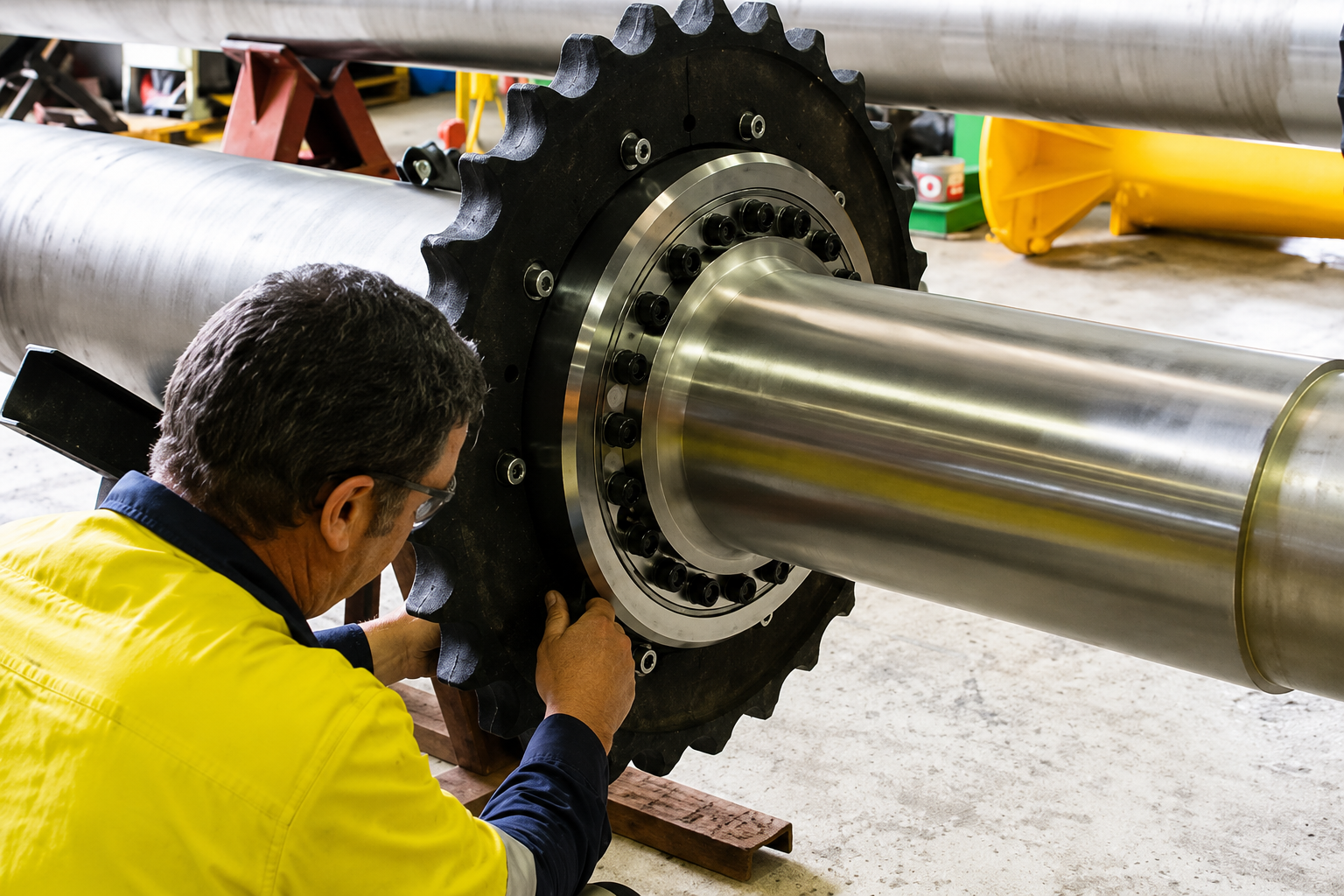
Worker installing a large sprocket

How Aftermarket Servicing Extends the Life of Your Equipment

Your heavy equipment represents a significant investment in your business and operational efficiency. With the right maintenance approach and aftermarket servicing, you can protect that investment, reduce operating costs, avoid unexpected breakdowns, and improve overall site productivity and safety.

In this article, we explain the different benefits and ways that aftermarket servicing can extend equipment lifecycles.

What is aftermarket servicing?

Aftermarket servicing refers to the maintenance, repairs, parts replacement, troubleshooting and lifecycle support provided after original equipment purchase and installation. It often includes scheduled maintenance, remote diagnostics, on-site inspections, refurbishment and access to specialised parts. A comprehensive aftermarket service capability supports equipment throughout its lifecycle, from commissioning through ongoing operation and eventual overhaul or replacement.

Key benefits of aftermarket serving

1. Extended equipment lifespan

Regular preventive maintenance and servicing are among the most reliable ways to extend the life of your machinery. Heavy industrial equipment that operates in harsh environments is especially susceptible to wear and tear. Without systematic care, minor issues can escalate into major breakdowns that significantly shorten service life.

In contrast, structured aftermarket servicing ensures components are inspected, lubricated, adjusted and replaced as necessary. This proactive approach helps avoid catastrophic failures and keeps equipment operating closer to its optimal performance thresholds.

2. Cost efficiency

It may seem counterintuitive, but investing in regular aftermarket servicing reduces long-term costs. Reactive repairs and unplanned downtime often lead to expensive emergency call-outs, lost productivity and secondary damage to surrounding components. Preventive servicing allows issues to be identified and resolved before they escalate into major failures. It enables maintenance to be scheduled during planned shutdowns rather than urgent stoppages, improving cost predictability and minimising disruption to operations. Over time, this structured approach maximises return on investment by keeping equipment running longer and more consistently while lowering overall lifecycle expenditure.

3. Optimised performance

Maintenance is not only about preventing breakdowns. Aftermarket servicing also ensures equipment continues to operate at peak efficiency throughout its lifecycle. Regular inspections, calibration, component adjustments and timely parts replacement help machinery perform closer to its original design specifications.

When equipment is maintained correctly, it runs more smoothly, consumes energy more efficiently and delivers more consistent output. This reduces strain on critical components and lowers the likelihood of performance-related faults. Optimised performance also supports safer operating conditions and maintains equipment that is less prone to sudden failure or unpredictable behaviour. Over time, this consistent operational reliability contributes to higher site productivity and improved overall performance.

Choosing the right aftermarket service provider

Not all service providers are equal. When selecting a partner to support your equipment, consider:

  • Lifecycle experience: Look for a provider with experience supporting equipment end-to-end, from commissioning to decommissioning.
  • Parts availability: Fast access to genuine and suitable replacement parts can dramatically reduce downtime and prevent secondary failure.
  • Remote support capabilities: Providers that offer remote diagnostics and virtual assistance can resolve issues faster and reduce travel costs.
  • Track record in your industry: Choose a service partner familiar with the demands of your operational environment and the specific equipment brands you rely on.

Keep your equipment reliable, your operations productive, and your costs predictable. Choose Transmin as your aftermarket service partner who understands your machines and your business.

Get in touch to learn more.