Understanding Lime Preparation Plants and Their Benefits
Lime in its various forms plays a vital role in ore processing, environmental management, and operational safety.
Without it, mining operations would face unstable pH levels, reduced mineral recovery, accelerated equipment corrosion, and greater environmental risk.
That’s why lime preparation plants are so important. These facilities handle, store, and process lime products to ensure they are safely and efficiently converted into usable forms for pH control, neutralisation, and other chemical processes.
What are lime preparation plants?
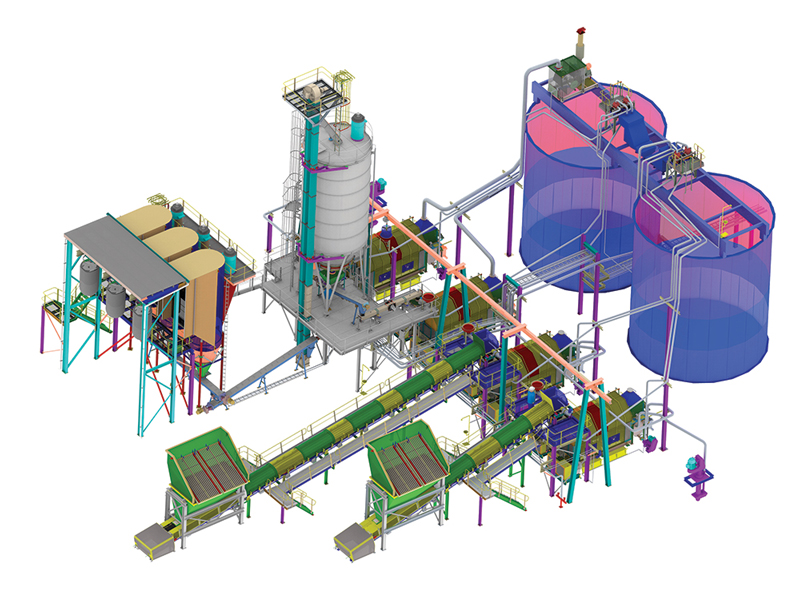
A lime preparation plant (also known as a lime processing plant) is designed to manage the full lime production process, from receiving raw lime to preparing consistent, controlled mixtures for use in downstream processes. Depending on the application, systems can range from simple hydrated lime mixing setups to fully integrated quicklime slaking plants with control and storage systems.
Hydrated lime mixing facilities
These facilities support the hydrated lime production process and provide a straightforward and cost-effective method for producing lime slurries. Hydrated lime mixing facilities typically receive lime via pressurised tankers or bulk bags and use accurate dosing equipment to mix lime with water in controlled proportions. The result is a consistent slurry that can be readily used across industrial processes such as water treatment or mineral recovery.
Full lime slaking plants
Full lime slaking plants are used where higher lime throughput or continuous production is required. Quicklime is received in bulk, stored in silos, and fed automatically into ball mills where it is combined with water under precise conditions. This produces milk of lime (MOL), a slurry that can be stored, agitated, and distributed as needed. Closed or open-loop grinding configurations may be used depending on site requirements, and automated controls maintain optimal reaction temperatures and feed rates for efficient slaking.
Other applications
Lime preparation plants can be adapted for a variety of uses beyond traditional slaking or mixing, including:
- Flue Gas Desulphurisation (FGD) systems
- pH control in heap leaching and mill feed operations
- Water and wastewater treatment
- Limestone grinding, feeding, and blending systems
Benefits of lime preparation plants
Improved process efficiency
Modern lime preparation systems are designed to optimise every stage of the process, from storage to slaking. Automated control systems, roller-mounted ball mills, and precise dosing mechanisms improve the consistency of the milk of lime produced, reduce waste, and maximise utilisation of raw materials.
Streamlined receival
Plants can accept lime from a range of delivery methods (e.g., bulk bags, pressurised vehicles, or hoppers), allowing flexible integration into existing operations. This versatility helps reduce manual handling and improves efficiency in plant logistics.
Optimised storage
Storage systems are tailored to site needs, often using single or multiple silos with automated transfer systems. Properly designed storage helps maintain product quality and ensures a reliable supply of lime for continuous production.
Dust control via wetting
Pre-wetting units play a key role in controlling dust and improving the efficiency of the slaking process. By adding moisture before grinding or mixing, these systems enhance safety and promote a cleaner working environment.
Integrated limestone handling
Dedicated limestone grinding systems can be incorporated within a lime preparation plant, allowing operations to manage both raw limestone and processed lime products on site. This integration supports flexibility in production and greater control over raw material use.
Consistent milk of lime quality
Milk of lime storage tanks are equipped with agitation, level control, and monitoring systems to maintain a consistent slurry. These tanks can be constructed on-site or delivered as prefabricated units, depending on project requirements.
Reduced maintenance
Design simplicity and robust engineering reduce the need for frequent maintenance. Components such as roller-mounted ball mills and trunnion-drive systems are built for reliability and ease of servicing, helping minimise operational downtime.
Safety and reliability
Enclosed transfer systems, dust suppression equipment, and fume extraction scrubbers all contribute to a safer working environment. Automated process control limits manual intervention, reducing operator exposure to caustic materials while ensuring consistent plant performance.
Flexible applications
Lime preparation plants can be customised to suit various industry needs, from small-scale water treatment systems to large-scale mining operations. Their modular design enables easy adaptation to various materials, capacities, and environmental standards.
Transmin lime preparation plants
Lime preparation plants are essential for industries that rely on consistent and efficient lime processing.
At Transmin, we offer comprehensive, turnkey lime preparation and processing solutions tailored to your specific needs.