How Rockbreaker Automation Reduces Maintenance Costs
In mining, maintenance is one of the largest ongoing operating costs, and rockbreakers are among the most demanding assets to maintain.
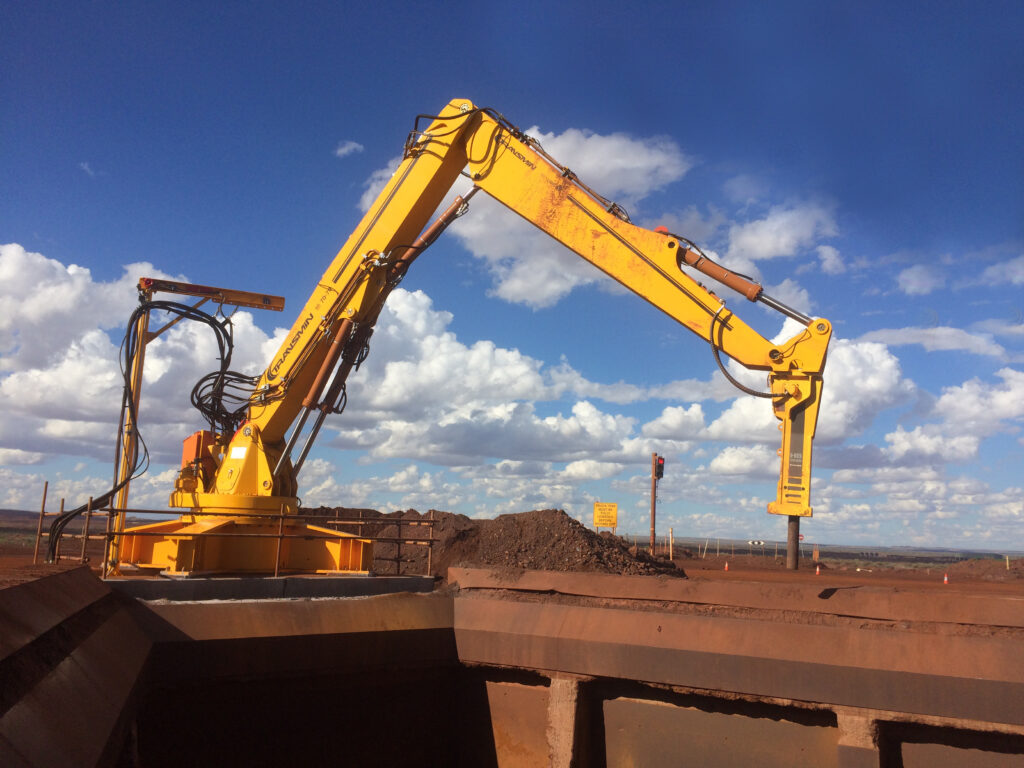
Positioned above primary and secondary crushing stations, rockbreakers operate in harsh site conditions, where they are subjected to constant impact. When they are operated inconsistently or maintained reactively, the result is unplanned breakdowns and costly crusher downtime.
As maintenance budgets tighten and production targets rise, mining operations are looking beyond traditional maintenance strategies. Rockbreaker automation has emerged as one of the most effective ways to reduce equipment wear at the source, catch faults before they become failures and keep crushing circuits running.
This article explores how rockbreaker automation reduces maintenance costs, the broader operational benefits it delivers, and how modern automated rockbreaker systems achieve these outcomes in practice.
Why Rockbreaker Automation Matters
Rockbreakers operate in some of the most demanding areas of a mine or mineral processing plant. They are exposed to dust, vibration, impact, hydraulic loads and changing material conditions.
In these environments, small operational issues can quickly become expensive maintenance events. If oversize material cannot be broken, the crusher feed is interrupted, and crusher downtime quickly becomes an expensive interruption to production.
The direct costs of repairing a damaged boom, hammer or hydraulic system are often only a fraction of the total. The greater cost is usually the lost production while the crushing station sits idle and maintenance crews are mobilised, sometimes to remote locations hours from the nearest workshop.
The limitations of manual operation
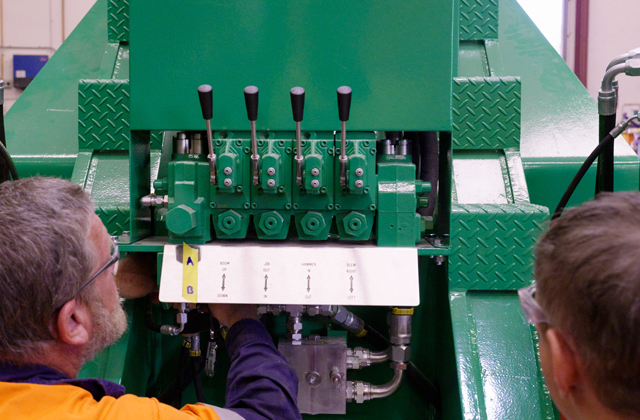
Manual rockbreaker operation can create several maintenance challenges:
- Operators may use different movement patterns and levels of force.
- Camera angles may not provide complete visibility around the boom.
- Restricted areas can make machine positioning more difficult.
- Repeated manual parking and deployment may place unnecessary stress on components.
- Fault information may be limited or scattered across separate systems.
- Maintenance teams may need to attend the machine before identifying the source of a problem.
These operational challenges explain why mining automation has become a growing priority across the industry.
Reliability engineers and maintenance managers are under sustained pressure to extend asset life, reduce reactive maintenance and improve availability, all while keeping people out of hazardous areas.
Automated rockbreaker systems help address all three priorities, which is why more operations are treating automation as a core reliability investment rather than an optional upgrade.
How Rockbreaker Automation Reduces Maintenance Costs
1. Reduced equipment wear
A significant portion of equipment wear is influenced by how the machine is operated.
Automated rockbreaker systems translate operator inputs into smooth, controlled movements, removing the jerky accelerations and hard stops that punish hydraulic cylinders, slew drives and structural joints.
Automated routines such as one-touch park and deploy ensure the boom follows the same efficient, repeatable path every time, even in tight and restricted spaces. The machine is never rushed, never over-extended, and always follows a smooth, repeatable movement path, significantly reducing wear across the entire boom system.
2. Fewer breakdowns and unplanned downtime
Collision damage is one of the most preventable causes of rockbreaker breakdowns, yet it remains common wherever operators rely on line of sight or cameras alone. Automation removes this risk through active collision avoidance.
By continuously tracking the position of the boom within a detailed 3D model of the site, the system automatically slows or stops movements before the machine can contact bin walls, handrails, camera posts or crusher components.
As a result, the damage that would once have triggered an emergency repair and days of lost production simply does not occur, and the maintenance budget is no longer absorbing the cost of avoidable incidents.
3. Improved preventative maintenance
Preventative maintenance is most effective when teams have reliable information about how equipment is performing.
Automated systems continuously log operational data, giving maintenance teams an accurate picture of how hard the machine is working, how often it is used and how key components are trending over time.
Depending on the configuration, the system may record:
- Hydraulic power unit data
- Machine position information
- Alarm history
- Operating events
- System status
- Fault conditions
- Performance trends
Based on these records, teams can schedule interventions based on actual usage and condition, instead of servicing at fixed intervals.
This shift from reactive to proactive maintenance reduces both the frequency and the severity of repairs, and allows parts, labour and shutdown windows to be planned well in advance.
4. Better diagnostics and fault identification
When something does go wrong, automation dramatically shortens the path to finding an accurate fix.
Modern systems consolidate control into a single platform with integrated data logging, so alarms, hydraulic performance data and system health metrics are all captured and available for review. Faults can be identified and often diagnosed remotely, before a technician is dispatched, meaning the right people arrive with the right parts.
For remote sites, where a single unnecessary call-out can cost thousands of dollars, faster fault identification reduces both labour time and crusher downtime.
Beyond Maintenance: Additional Benefits of Rockbreaker Automation
While the maintenance case is compelling on its own, the benefits of rockbreaker automation extend well beyond the workshop.
- One of the most important benefits of rockbreaker automation is improved operator safety:
Remote rockbreaker operation allows the operator to control the machine from a protected control room or remote operations centre rather than remaining close to the crusher. They are no longer exposed to flyrock, dust, noise and vibration. Where site access is still required, monitored safety gates and integrated shutdown systems regulate entry and protect anyone working near the machine. - Remote operation improves workforce efficiency:
A single operator can manage multiple rockbreakers at different crushing stations from one desk, taking control of whichever machine needs attention. For high-output mines with several crushing circuits, this materially improves staff utilisation without compromising response times. - Crusher uptime improves:
Blockages are cleared faster when the operator can respond immediately from the control room rather than travelling to the site, and automated park and deploy routines minimise the delays associated with positioning the machine. Integration with plant control systems adds a further layer of efficiency, with signals from vehicles and surrounding equipment automatically retracting the rockbreaker to keep crushing operations moving. - Automation delivers consistency:
Every movement follows the same controlled logic regardless of who is operating, which shift they are on or how long they have been working. Machine performance becomes uniform and predictable, and that predictability flows through to more reliable production planning and more accurate maintenance forecasting.
How RockLogic Supports Modern Mining Operations
Transmin los RockLogic provides a practical example of how rockbreaker automation can address maintenance and operational challenges.
From an operational perspective
Developed in close collaboration with mining customers and refined over many years in the field, Transmin RockLogic combines remote operation, collision avoidance, automated movements and integrated diagnostics in a single intelligent control platform.
Its high-precision sensors track the boom’s position and display it within a 3D model of the surrounding area. This allows the system to manage movement and help prevent contact with critical plant infrastructure.
Operators control the machine safely from a control room using an ergonomic controller with real-time feedback, and automated park and deploy routines ensure smooth, repeatable movements with the press of a button.
From a maintenance perspective
RockLogic consolidates all rockbreaker functions into a single controller, which simplifies fault finding and makes diagnostics far more efficient. Operational data and alarms can be logged for later review, supporting system health assessment and more informed maintenance planning.
It also features a SIL 2-capable safety system, designed to Australian and international standards, that can be tuned to site-specific requirements. Additionally, its flexible integration allows RockLogic to connect with existing plant control and safety systems rather than replacing them.
How Transmin RockLogic reduces maintenance risks on site
RockLogic’s functions can reduce specific maintenance risks on site, such as:
- Preventing contact with nearby crusher structures
- Reducing stress caused by repeated manual movements
- Improving access to fault and alarm information
- Supporting remote technical assistance
- Reducing the time required to respond to blockages
- Moving operators away from hazardous areas
- Integrating the rockbreaker with existing plant controls
Whether paired with Transmin’s range of heavy-duty rockbreakers or retrofitted to an existing installation, RockLogic turns the principles of rockbreaker automation into measurable outcomes: less wear, fewer breakdowns, faster diagnostics and safer operations.
Invest in Reliability, Not Repairs
Rockbreaker automation has moved from an emerging technology to a proven strategy for reducing maintenance costs in mining operations.
By smoothing machine movements, preventing collisions, enabling proactive maintenance and simplifying diagnostics, automation attacks the root causes of equipment wear and unplanned downtime rather than just treating the symptoms.
Add the safety benefits of remote operation and the productivity gains of improved crusher uptime, and the investment case becomes difficult to ignore.
With over 35 years of experience in bulk materials handling and mining automation, Transmin understands the operational challenges behind every blocked crusher and every unplanned repair.
To learn more about RockLogic and how rockbreaker automation can improve reliability at your site, contact the Transmin team today.