Improving Gold Processing Plant Efficiency: Key Equipment Considerations
Australian gold processing operations are under sustained pressure to maintain throughput while dealing with variable ore conditions, equipment wear, unplanned stoppages and ongoing operating costs.
These pressures are rarely confined to one stage of the plant. A restriction at the stockpile or crushing circuit can affect downstream processing. Inconsistent reagent preparation can make process conditions harder to control. Poorly planned grinding media handling can create operational and safety issues around the mill.
For this reason, decisions around gold processing equipment need to consider how individual systems contribute to the performance of the entire plant’s processing circuit.
Reliable feeding, controlled lime and reagent preparation, dependable grinding support and accessible maintenance all play a part in keeping a gold processing plant operating consistently. Looking at these areas together can help engineering and operations teams identify where equipment choices may be contributing to bottlenecks, downtime or unnecessary manual intervention.
Key Challenges Facing Australian Gold Processing Operations
Gold processing plants across Australia operate under demanding conditions that pose challenges to material handling and process equipment.
1. Maintaining Consistent Plant Throughput
Even small interruptions in feed rate ripple through downstream stages, affecting crushing, grinding and leaching performance. Plants need equipment that can sustain a steady, controllable flow of material, even when ore characteristics vary from shift to shift. A plant designed around an average feed rate can still fall short of target if the equipment cannot cope with the peaks and troughs that come with real ore supply.
2. Managing Abrasive and Variable Ore
Gold ore bodies rarely behave uniformly. Hardness, moisture content and particle size can change from one section of a pit to the next, placing uneven wear on feeders, conveyors and mills. Sites blending ore from multiple sources or transitioning between pits often find that equipment selected for one ore type struggles once the blend changes. Equipment selected without sufficient consideration of these characteristics may require more frequent maintenance, driving overall costs.
3. Reducing Unplanned Downtime
Every hour a plant is offline for an unscheduled repair is an hour of lost production. Unplanned downtime is often traced back to equipment that was undersized for the application, poorly maintained or simply not suited to the material it was handling in the first place. In many cases, the root cause is not a failure of the equipment itself, but a mismatch between what the equipment was designed to do and what it is actually being asked to handle day-to-day.
4. Controlling Operating and Maintenance Costs
With energy and labour costs continuing to rise, sites are under pressure to extract more value from existing infrastructure rather than expanding capital spend. This is pushing many operations to reassess whether their current feeding, reagent and grinding-support equipment is genuinely fit for purpose, or simply what was available when the plant was first built.
Maintenance budgets in particular are coming under scrutiny, with sites looking closely at which equipment consumes a disproportionate share of parts and labour relative to its role in the circuit.
These pressures are encouraging plant teams to assess equipment in terms of how it performs within the wider processing circuit, rather than judging each item in isolation.
Why Reliable Material Feeding Matters in Gold Processing
Reliable material feeding is fundamental to maintaining consistent performance across a gold processing plant.
Mining feeders sit at the front end of the processing circuit, controlling how much ore enters the crushing and processing stages. When feed delivery is inconsistent, the effects can extend well beyond the feeder itself, creating fluctuations in throughput, increasing the risk of bottlenecks and making downstream equipment harder to operate efficiently.
1. Maintaining Consistent Feed Rates
A controlled and consistent feed rate helps keep crushing and downstream processing equipment operating within their intended operating range. If too little material is fed, available plant capacity may not be fully utilised. If too much material is introduced, it can overload crushers, conveyors or other equipment and create unnecessary wear or stoppages.
The right feeding equipment provides predictable material flow and allows operators to maintain a stable feed rate as production requirements change. This is particularly important where the plant is operating close to its design capacity, as even short periods of inconsistent feeding can affect overall throughput.
2. Managing Varying Ore Characteristics
Gold ore can vary significantly in hardness, moisture content, lump size and flowability. These changes can affect how material moves through hoppers, mining feeders and conveyors, particularly when ore is sourced from different areas of a mine or blended from multiple stockpiles.
Feeders need to be selected and configured around these conditions rather than based solely on a nominal feed rate. This helps reduce interruptions caused by bridging, blockages, uneven flow or excessive wear.
3. Reducing Bottlenecks Through the Processing Circuit
A restriction at the feed point can quickly become a plant-wide constraint. If material is not delivered consistently to the crusher, the crushing circuit may operate below capacity.
Conversely, uncontrolled or excessive feed can place additional pressure on crushing and conveying equipment, increasing the likelihood of blockages, overloads and unplanned stoppages.
Reliable feeding helps maintain a balanced flow of material through the circuit, allowing downstream equipment to operate more consistently.
4. Improving Overall Plant Availability
Feeding equipment also has a direct role in plant availability. Frequent feeder failures, excessive wear or difficult maintenance can result in repeated stoppages that affect production well beyond the time required to repair the equipment itself.
Selecting feeding equipment that is suited to the ore, duty and operating environment can reduce these interruptions and make maintenance more predictable.
For gold processing operations, dependable feeding is therefore more than a material handling consideration. It provides the controlled and consistent flow that allows crushing, grinding and downstream processing equipment to perform as intended.
By reducing feed-related fluctuations and bottlenecks, well-designed feeding systems can support more consistent throughput and contribute to higher overall plant availability.
Transmin’s range of industrial and mining feeders, including the Alimentador de bajo perfil, Alimentadores de delantal y Conventional Belt Feeders, is designed to handle abrasive, variable ore while maintaining consistent feed rates, helping reduce the bottlenecks that limit throughput further down the circuit.
Supporting Efficient Gold Processing with Reagent and Lime Systems
Reagent preparation and dosing are also important to maintaining stable conditions through the gold recovery process. Variations in lime or reagent concentration can affect process conditions, making it harder for operators to maintain consistent performance.
Reliable preparation and dosing systems help deliver the required materials at controlled rates while reducing the need for manual intervention.
Accurate Lime Preparation and Dosing
Lime is commonly used to control pH during gold processing, making accurate preparation and dosing important for maintaining the required process conditions. Inconsistent lime addition can lead to fluctuations in pH and make downstream process control more difficult.
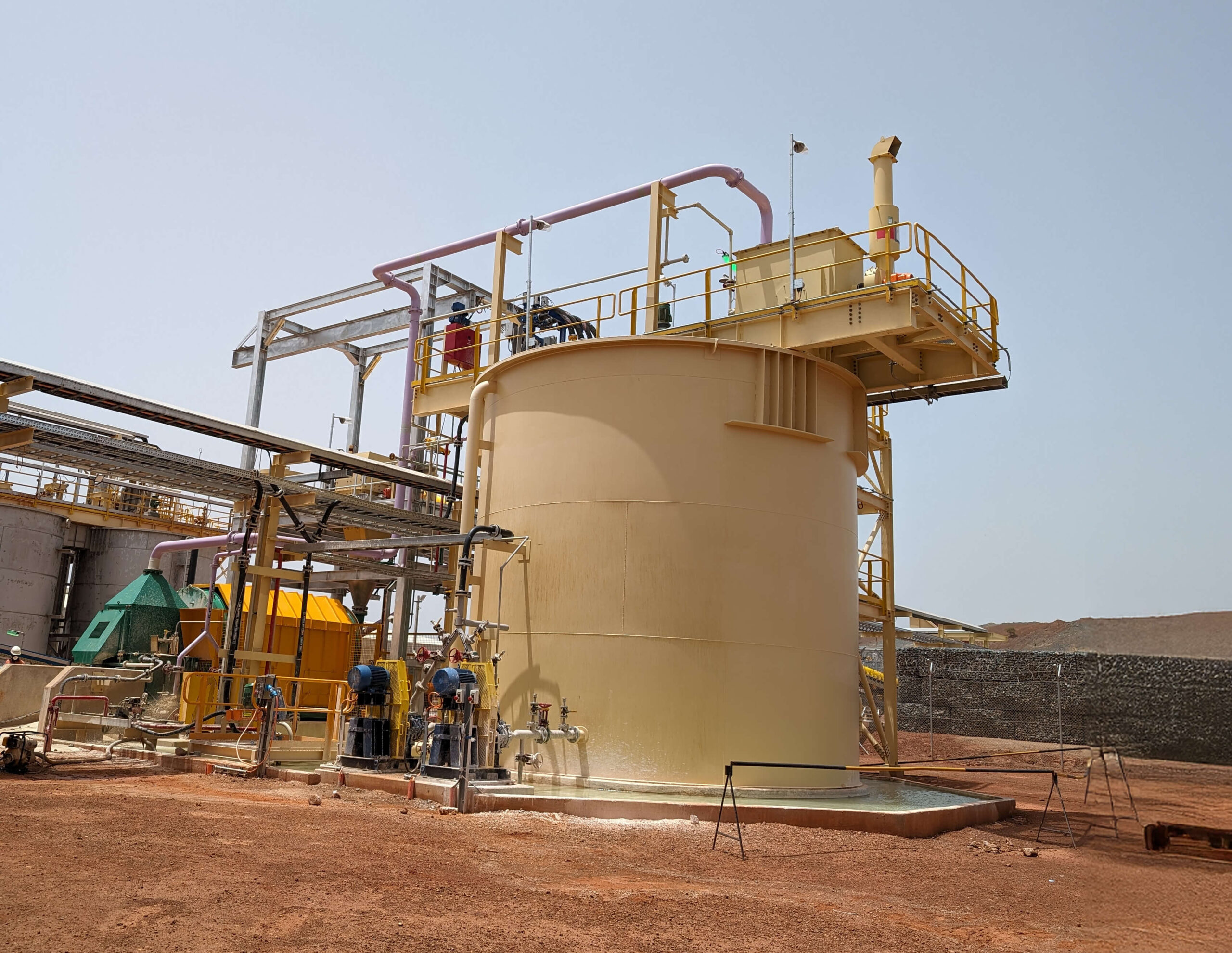
A dedicated lime preparation plant can provide a controlled approach to lime slaking, preparation and delivery. By producing a consistent lime slurry and controlling its addition to the process, the plant helps operators maintain more stable conditions while reducing reliance on manual preparation.
Reliable Reagent Preparation
Reagents need to be prepared at the correct concentration and delivered consistently to support predictable process performance. Manual preparation or inconsistent mixing can introduce variation into the process and increase the amount of operator intervention required.
Automated preparation and dosing systems can help maintain consistent reagent concentrations and flow rates. This allows operators to focus on monitoring and controlling the wider process rather than repeatedly adjusting reagent systems manually.
Improving Process Consistency
Small variations in reagent addition can have a wider effect on process stability. Consistent preparation and dosing help maintain more predictable operating conditions, which can make it easier to identify genuine process changes and respond to them before they affect overall plant performance.
This is particularly important in plants where multiple process parameters need to remain within defined operating ranges. Reliable reagent systems provide greater control over one of these variables and can support more consistent performance across the processing circuit.
Automation and Operator Safety
Manually handling powdered lime and process chemicals can expose operators to dust, spills and other workplace hazards, particularly where materials need to be manually transferred or mixed.
Automated preparation, transfer and dosing systems can reduce these tasks and limit unnecessary operator exposure. They can also provide more repeatable dosing and simplify routine monitoring, helping operations balance process control with safer working practices.
For gold processing plants, reliable lime and reagent systems are about more than chemical delivery. Accurate preparation, controlled dosing and greater automation can support process stability while reducing manual intervention and improving the overall operating environment.
Equipment Considerations for Australian Gold Operations
Selecting gold processing equipment requires more than matching a nameplate capacity to the planned production rate. Several operating and lifecycle factors should be considered before equipment is specified.
- Ore Characteristics and Abrasiveness
Equipment specifications need to reflect the actual material being handled, not a generic industry average. Abrasive, sharp or lumpy ore places different demands on wear liners, belt materials, and drive systems than finer, more uniform material, and selecting equipment without accounting for this tends to result in accelerated wear and higher parts consumption.
- Required Throughput
Engineers should also consider how consistently the equipment can deliver the required rate under changing operating conditions. This is especially important for feeding systems, where upstream variability can quickly affect the remainder of the process.
Design should therefore consider normal operating rates, expected variation and how the equipment will behave during start-up, shutdown and changing feed conditions.
- Plant Footprint and Layout
Space is often at a premium, particularly at brownfield sites where new equipment has to fit around existing infrastructure. Equipment with a smaller footprint or the ability to incorporate direction changes, such as an incline within a single machine, can reduce the civil works required for a project and shorten installation timeframes.
- Maintenance Accessibility
Processing equipment will require inspection, wear management and component replacement throughout its operating life. A piece of equipment that fits within the available space but becomes difficult to maintain can create problems later.
Access to rollers, belts, chains, liners, drives, pumps and other serviceable components therefore needs to be considered during design. Restricted access may extend shutdown work or make routine inspection more difficult.
- Grinding Media Handling
Grinding support is another equipment area that can affect plant operation. Grinding media consists of heavy steel balls that must be stored, transferred and introduced into the mill.
Where this activity depends heavily on manual handling or less controlled transfer methods, the process can become labour-intensive and expose operators to additional handling risks.
Transmin offers controlled ball charging systems that can combine storage hoppers, feeders, conveyors and distribution arrangements to store, feed and meter grinding media into one or more mill circuits, with alarm and metering functions incorporated where required.
- Equipment Lifecycle and Support
Equipment selection also needs to consider long-term reliability and how easily equipment can be maintained, supported and adapted as operating conditions change.
For Australian gold operations, particularly those located far from major population centres, the ability to plan maintenance and obtain appropriate parts and technical assistance can be an important consideration.
This is where supplier capability becomes part of the equipment decision. For a plant using several of these systems, working with a supplier familiar with multiple stages of the circuit can also help engineering teams consider how those systems interact.
Transmin offers a range of feeding, lime preparation, reagent systems, ball charging and bulk material handling equipment, along with reliable equipment service and maintenance solutions that help project teams assess equipment requirements across multiple stages of the processing circuit.
Building Reliability into the Entire Processing Circuit
Plant reliability is rarely the result of one equipment purchase.
A feeder that provides stable material delivery supports the equipment downstream. A dependable lime or reagent preparation system provides a more consistent supply to the process. Controlled ball charging supports routine grinding media handling around the mill.
If one of these supporting systems repeatedly becomes unavailable, its effect can extend beyond the equipment itself. This is why reliability needs to be built across the circuit. It can be built through:
- Considering equipment interactions across the circuit: Engineering teams should assess not only whether equipment can perform its immediate duty, but also how its operation affects adjacent equipment, maintenance schedules and overall plant availability.
- Planning maintenance beyond commissioning: Routine inspections, planned maintenance and access to suitable replacement components help maintain equipment condition and reduce the risk of avoidable interruptions over time.
- Reassessing equipment as operating conditions change: Changes in ore characteristics, production targets or plant layout can alter equipment requirements. Systems originally selected for one duty may need to be reviewed as the operation develops.
- Maintaining ongoing service and support: Access to service and support throughout the equipment lifecycle can help address maintenance requirements before they develop into larger reliability issues.
- Reviewing recurring restrictions across the circuit: Throughput issues may originate in material feeding, frequent operator intervention may point to reagent preparation or handling issues, and maintenance delays may indicate access or equipment configuration problems.
Looking at these issues together provides a clearer basis for deciding where equipment changes are likely to make the greatest practical difference.
Transmin supports this process by providing equipment expertise and ongoing service across feeding, lime preparation, ball charging and other supporting plant systems.
Improving Overall Efficiency of Gold Processing Plants
If your operation is reassessing the equipment supporting your gold processing circuit, Transmin’s team can help identify where feeding, lime preparation or grinding-support solutions could improve throughput and reliability at your site.
Contact Transmin to discuss the operating requirements, plant constraints and equipment options for your application.