
Choosing the Right Belt Feeder: A Practical Guide for Mining and Bulk Materials Operations
Belt feeders are one of the most widely used pieces of equipment in mining and bulk materials handling, but not every belt feeder suits every application. The wrong choice shows up as unplanned downtime, accelerated component wear, and bottlenecks that limit throughput further down the line. The right choice, matched properly to your material and site conditions, keeps operating for years with minimal intervention.
This guide walks through the key considerations to help you make a well-informed decision.
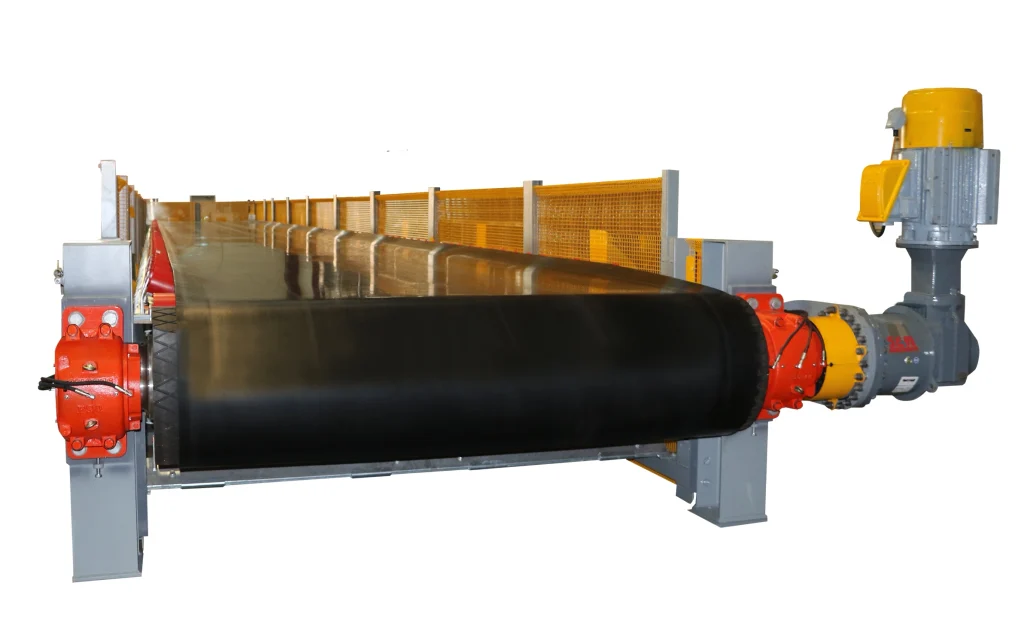
What is a belt feeder?
A belt feeder is an important element in many bulk materials handling systems. It’s a continuous belt system that controls how solids flow from a storage vessel, drawing material from a hopper, bin or stockpile at a steady, controllable rate.
This sets it apart from an apron feeder, which uses interlocking steel pans rather than a belt, and from a Alimentador de bajo perfil, which combines elements of both into a single hybrid machine. A belt feeder design is typically the more economical option where material and site conditions allow, and is used across applications, including filter press discharge, HPGR discharge, screen feeding and under pan screen discharge.
Factors to consider when selecting a belt feeder
1. Material type and characteristics
Your choice will largely depend on the type and characteristics of the material you’re handling. Belt feeders are generally preferable when handling friable, coarse, fibrous, elastic, sticky or very cohesive materials, where a moving belt causes less degradation than rigid steel pans.
Free flowing materials are straightforward to handle, while sticky or highly cohesive materials increase the risk of carryback and build up on rollers and pulleys. Moisture content affects flow behaviour and belt cleaner selection, particle size influences belt and liner choice, and abrasiveness has a direct bearing on wear rates and component life.
2. Capacity and throughput requirements
It’s important to define your normal and peak feed rates before selecting a drive system. A fixed speed drive is a simple, cost effective option for consistent, steady state operations. A variable speed drive gives finer control where demand fluctuates and helps protect downstream equipment from surge loading, so it’s worth matching your feed rate carefully to what sits further down the line.
3. Feeder length and width
A belt feeder design can be built up to 50m in length and up to 3.2m wide. The right dimensions come down to your site layout, hopper geometry and required throughput, so it’s worth working through these with your supplier early rather than retrofitting a design.
4. Drive and tensioning system
Belt feeders typically use compact, shaft mounted drives, either planetary helical bevel combinations or hydraulic units, depending on torque and duty requirements. Tensioning is usually handled by a manual screw take up system as standard, with hydraulic assisted tensioning available for larger or more demanding applications.
5. Mistracking risk
Mistracking, where the belt wanders to one side, is the most common limitation of a belt feeder. In many applications, it’s a manageable, minor issue. Where it becomes a real problem is under frequent reversing duty, which belt feeders don’t handle well.
If your application calls for regular reversing, or you’re already dealing with persistent tracking issues, a Alimentador de bajo perfil is worth considering instead. Tension is carried through chains rather than the belt, which removes the mistracking problem entirely.
6. Site and environmental conditions
Temperature extremes, dust and available space all influence component selection. Confined sites can also affect maintenance access, so it’s worth factoring this in at the design stage rather than after installation.
7. Customisation and design options
Every site is different. Wear liners, idler and roller sets, sprockets and belt cleaning systems can all be tailored to your material and duty cycle, so the right components are selected for your application from the outset.
Getting the right equipment for your application
Transmin has been designing and supplying bespoke belt feeders for mining, mineral processing and general bulk materials handling applications since 1987. Transmin belt feeders are built to be safe to operate and reliable, with material characteristics, throughput, layout, and site conditions all considered as part of a single design process rather than in isolation.
Our engineering team can help you work through the variables and specify the right belt feeder for your site. Get in touch with us to discuss your application and find the right feeder for your operation.